Posts

How to treat and prevent ear barotrauma

Image
How to treat and prevent ear barotrauma: Barotrauma  is one type of physical damage to body tissues caused by  a change in pressure around the ear . A person can feel pain. Discomfort in the middle of their ear or can  cause discomfort or pain as well as difficulty hearing. It is important that people understand what ear barotrauma is so that they can seek medical attention if necessary.  The condition of barotrauma can be acute or chronic. Acute cases are common and generally harmless. Though, a person with chronic ear barotrauma will experience prolonged symptoms, which may lead to further complications. Causes of ear barotrauma: The common cause of ear barotrauma is the blockage of the eustachian tube, which connects the ear and mouth and when there are external changes in pressure, the eustachian tube is responsible for maintaining balance. Due to a blockage in the tube, the pressure differences created inside and outside the middle ear can ...

Acute Abdomen Symptoms and Management:

Image
Acute Abdomen Symptoms and Management: The acute abdomen shows a rapid onset of severe life- threatening symptoms includes the sudden, spontaneous, nontraumatic disorder whose chief manifestation is in the abdominal area.  For acute abdomen urgent operation may be necessary. Acute abdomen has a large number of possible causes and so a structured approach is required. If the patient has an acute surgical problem the initial assessment for acute abdomen should attempt that requires immediate and prompt surgical intervention, or urgent medical therapy. Abdominal pain is a common problem. Symptoms and Causes: Vomiting, Haematemesis or melaena, Stool/urine colour, Fainting, dizziness or palpitations, Fever/rigors, Rash or itching, Urinary symptoms, recent weight loss. Some common causes of acute abdomen usually involve a slower rate of bleeding, but with urgent surgery still required, include bleeding gastric ulcer, ruptured ectopic pregnancy, and trauma. ...

Hypercalcemic Crisis: Symptoms and Complications

Image
Hypercalcemic Crisis: Symptoms and Complications Hypercalcemic crisis  is one life-threatening condition that is currently rather rare in which the calcium level in the blood is above normal. The risk factor i.e. too much calcium in the blood can weaken the bones, create kidney stones also shows its effect on heart and brain work. Symptoms: For mild hypercalcemia, the person might not have signs or symptoms. In severe cases produce signs and symptoms related to the parts of the body affected by the high calcium levels in your blood.  Examples include: Kidneys. Kidneys have to work harder when the amount of calcium in the blood is too high. This can leads to excessive thirst and frequent urination. Digestive system. Hypercalcemia can cause stomach upset, nausea, vomiting and constipation. Brain. Hypercalcemia can interfere with our brain works, resulting in confusion, lethargy and fatigue. It can leads to depression. Heart.Severe hypercalcemia can i...
Image
Rhabdomyolysis: Causes and Symptoms The life threatening syndrome due to a direct or indirect muscle injury is known as rhabdomyolysis . Rhabdomyolysis results from the death of muscle fibers and release of their contents into the bloodstream. This can lead to serious complications such as renal failure. The kidneys cannot remove waste and concentrated urine in case of renal failure. Rhabdomyolysis can even leads to death in rare cases. However, for a good outcome prompt treatment is required. Symptoms: The initial symptoms of rhabdomyolysis include: fatigue, low urine output, muscle weakness, nausea, vomiting, confusion, agitation, infrequent urination and fever. The complications of rhabdomyolysis include very high levels of potassium in the blood.  That can leads to an irregular heartbeat or cardiac arrest , kidney damage (which occurs in up to half of patients), rarely liver damage. After fluid resuscitation a condition called compartment s...
Image
Diagnosis and Clinical manifestations of Stress Cardiomyopathy  A sudden temporary weakening of the muscular portion of the heart leads to stress cardiomyopathy, which is one common type of non-ischemic cardiomyopathy . This weakening may be triggered by emotional stress, such as the death of a loved one.  Stress cardiomyopathy leads to one of the common names, broken heart syndrome.   Ventricular rupture, lethal ventricular arrhythmias, and acute heart failure are caused by Stress cardiomyopathy. Clinical Manifestations: The clinical presentation of stress cardiomyopathy is similar to that of an acute coronary syndrome. Symptoms and signs: acute chest pain, dyspnea, and syncope are the most common symptoms of stress cardiomyopathy. Other symptoms include heart failure, tachyarrhythmias, sudden  cardiac arrest  and bradyarrhythmias. Diagnosis: Stress cardiomyopathy most commonly seen in postmenopausal women who present with a suspected ac...
Image
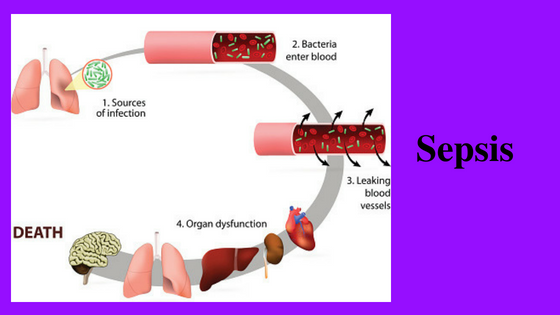
Management of suspected sepsis and septic shock in adults: Sepsis is a clinical and life-threatening condition characterized by systemic inflammation due to infection. The sepsis severity is continuum ranging from sepsis to septic shock .  Signs and symptoms: The signs and symptoms include low body temperature, fever, increased heart rate, confusion, metabolic acidosis. The early sepsis signs are a rapid heart rate, high blood sugar and decreased urination. In case of sepsis, the drop in blood pressure may leads to shock. Some symptoms are also related to specific infection. Severe sepsis causing poor organ function or insufficient blood flow. Cause: Sepsis is caused by an immune response which is triggered by an infection. Most commonly, the infection is known by bacterial, but it may also be from fungi, viruses, or parasites. Common locations for the primary infection include lungs, brain, urinary tract, skin, and abdominal organs. Sepsis is normally ...
Image
Nerve damage caused by diabetes: Diabetic neuropathy is the nerve damage that is caused by diabetes (also known as "diabetes mellitus"), which damages the nerves that send signals from your hands and feet. The nerve damage is due to over time, high blood glucose levels, which also called blood sugar, and high levels of fats, such as triglycerides, in the blood from diabetes.  People who are suffering from diabetes can get different types of nerve damage. Symptoms of nerve damage caused by diabetes: Usually the toes and feet first affected by nerve damage. In this case some people do not feel any symptoms, yet other people can feel symptoms that include: loss of feeling or numbness, pain or burning, tingling. As nerve damage gets worse, symptoms can move from the feet up the legs. Some people may also start to feel symptoms in their hands. The test for nerve damage caused by diabetes known as electromyography . How does nerve damage lead to p...